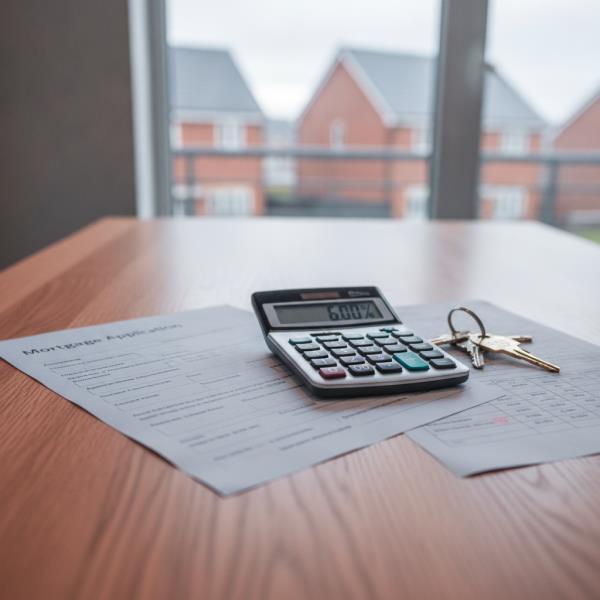
Mortgage Rates at 6%: What Buyers Need to Know Now
With two-year fixed mortgage rates approaching 6% in late 2026, partly driven by Middle East tensions unsettling markets, buyers face a genuinely uncertain environment. This guide explains the gap between the Bank of England base rate and what lenders actually charge, with real repayment figures to help you plan.
The Bank of England held its base rate at 3.75% in September 2026, yet lenders are quoting two-year fixed rates of around 5.97–5.98% and five-year fixes nudging 6%. If those numbers seem oddly far apart, you are not alone in finding it confusing. Understanding why that gap exists, and what it means for your monthly budget, is the first step to making a clear-headed borrowing decision.
Why Your Mortgage Rate Is Not the Base Rate
The Bank of England base rate is the rate at which the Bank lends to commercial banks overnight. It acts as a floor, not a ceiling, for the rates those banks then charge you. Lenders layer on their own costs: funding costs from wholesale money markets, operational overheads, a profit margin, and a risk premium. They also price in where they expect rates to go over the term of your mortgage.
In late 2026, financial markets have been rattled by renewed tensions in the Middle East, pushing up the cost of borrowing on global bond markets. Because lenders fund long-term mortgages using those same markets, higher bond yields feed directly into fixed mortgage rates, even when the base rate stays put. That is why a 3.75% base rate can sit alongside a 6% five-year fix.
What 5%, 5.5% and 6% Actually Costs Each Month
Abstract percentages become real when you run the numbers. The figures below are for a £250,000 repayment mortgage over 25 years, calculated on a standard capital-and-interest basis:
5.00%: approximately £1,461 per month
5.50%: approximately £1,531 per month
6.00%: approximately £1,611 per month
Moving from 5% to 6% adds roughly £150 a month, or £1,800 a year. Over a two-year fixed term that is £3,600 extra compared with borrowing at 5%. That gap is worth stress-testing against your budget before you commit to an offer price.
Tracker or Fixed: Which Makes Sense Right Now?
A tracker mortgage follows the base rate (usually at a set margin above it). If the base rate falls, so does your payment. The attraction is obvious when rates are expected to drop. But trackers offer no ceiling. If rates rise, your payment rises with them.
A fixed-rate mortgage locks your payment for a set period regardless of what happens to the base rate or swap rates. You pay a premium for that certainty, which is why fixed rates currently sit well above the base rate.
In a stable environment, the choice is largely a question of personal risk appetite. In the current environment, where geopolitical events can move markets sharply within days, the case for fixing is stronger than usual. A tracker might save you money if rates fall quickly, but it exposes you to sudden rises that are hard to predict. Speak to a qualified mortgage broker who can model both scenarios against your specific loan size, income, and how long you plan to stay in the property.
How to Protect Yourself as a Buyer
There are three practical steps worth taking now:
Lock in a rate offer early. Most lenders allow you to secure a mortgage offer for between three and six months. Once you have an accepted offer on a property, applying for your mortgage immediately means you are insulated from rate rises during that window. If rates fall before completion, many brokers can switch you to a better deal.
Use a whole-of-market mortgage broker. Brokers access deals not always available directly to consumers and can compare dozens of lenders in one go. Their advice is regulated, and many are paid by the lender rather than by you. Always confirm the fee structure upfront.
Understand what your offer covers. A mortgage offer is not the same as a rate reservation. Check precisely how long your agreed rate is guaranteed, what happens if your completion is delayed, and whether there is a fee for extending.
Should You Wait for Rates to Fall?
It is tempting to hold off, hoping that rates retreat before you complete. But geopolitical volatility, the kind currently rippling through energy and bond markets, does not follow predictable timetables. Rates could ease if tensions subside; they could climb further if they escalate. Economists and markets have been wrong about rate direction repeatedly over the past four years.
Waiting also has an opportunity cost: properties you want may be sold, vendors may lose patience, and any saving on a rate might be offset by a higher purchase price in a market where supply remains constrained.
Practical Takeaway
The gap between the base rate and your actual mortgage rate is real, structural, and unlikely to close quickly. Run the repayment sums at current rates, not the rates you hope for, and budget accordingly. If a purchase stacks up at 6%, you are in a resilient position whatever happens next. If it only works at 5%, think carefully before proceeding.
Once you are in a transaction, keeping track of progress matters as much as the rate you locked in.
About this article: written by the Agreed team. We publish honest, hands-on guides on UK property based on what our associates and developer partners are actually doing day-to-day. Spot something out of date or wrong? Tell us via the contact page.